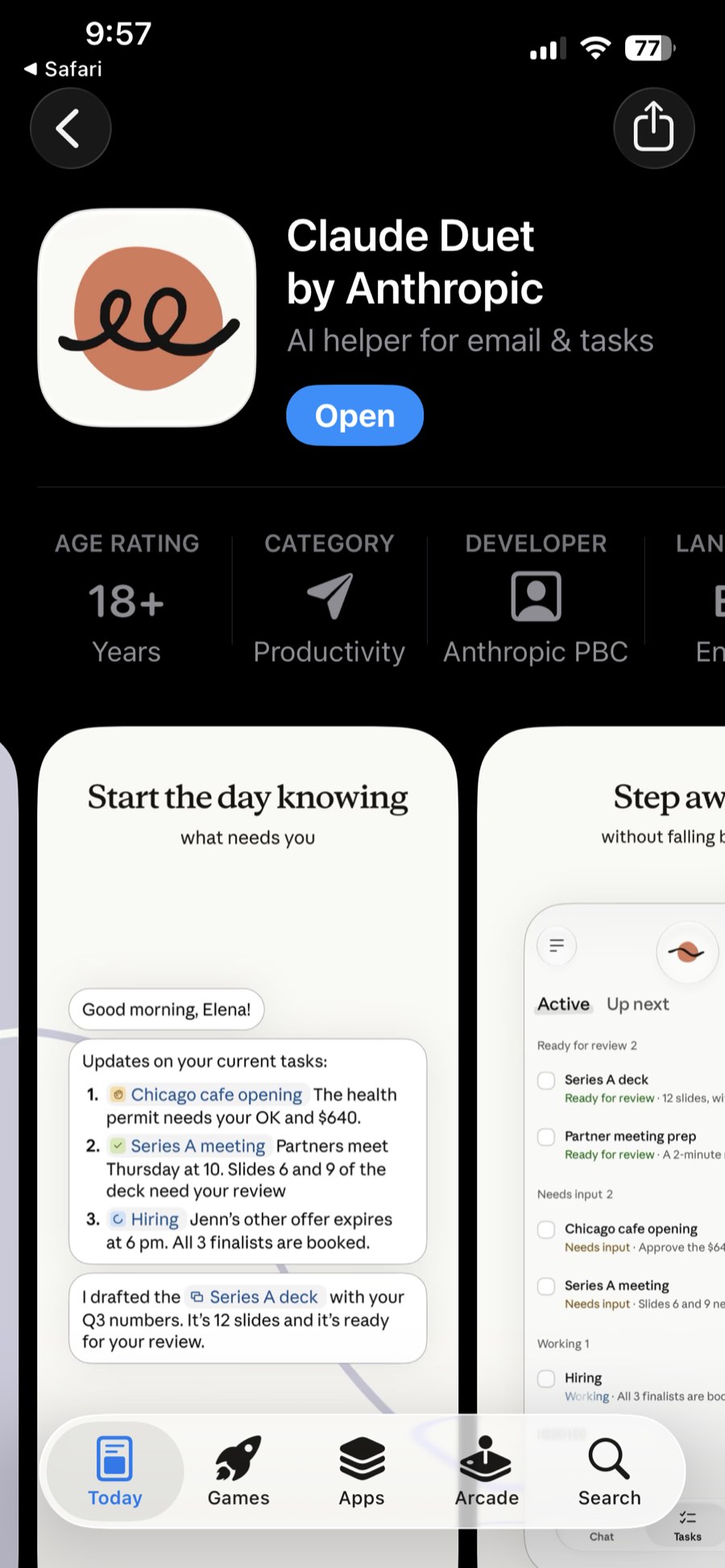
I'd been on the waitlist for Claude Duet since Anthropic opened it on October 21. When the email came saying I was in, I downloaded it right away.
First, some context. Claude is my workhorse AI tool. So I came in curious to see what Anthropic's own agent would do. I've tried OpenAI's Dots. I use Meta's Muse for a few things, particularly any research sitting on Meta products. But the agent I live with day in and day out is Grok Bot. I run a primary bot, and nine others each with its own job, from my morning brief to sweeps of X to vacation planning. Grok Bot is the bar. It's very good and only getting better.
However, as a Claude user, I would be remiss if I didn't try out Duet.
Here are my first impressions after one day.
The onboarding
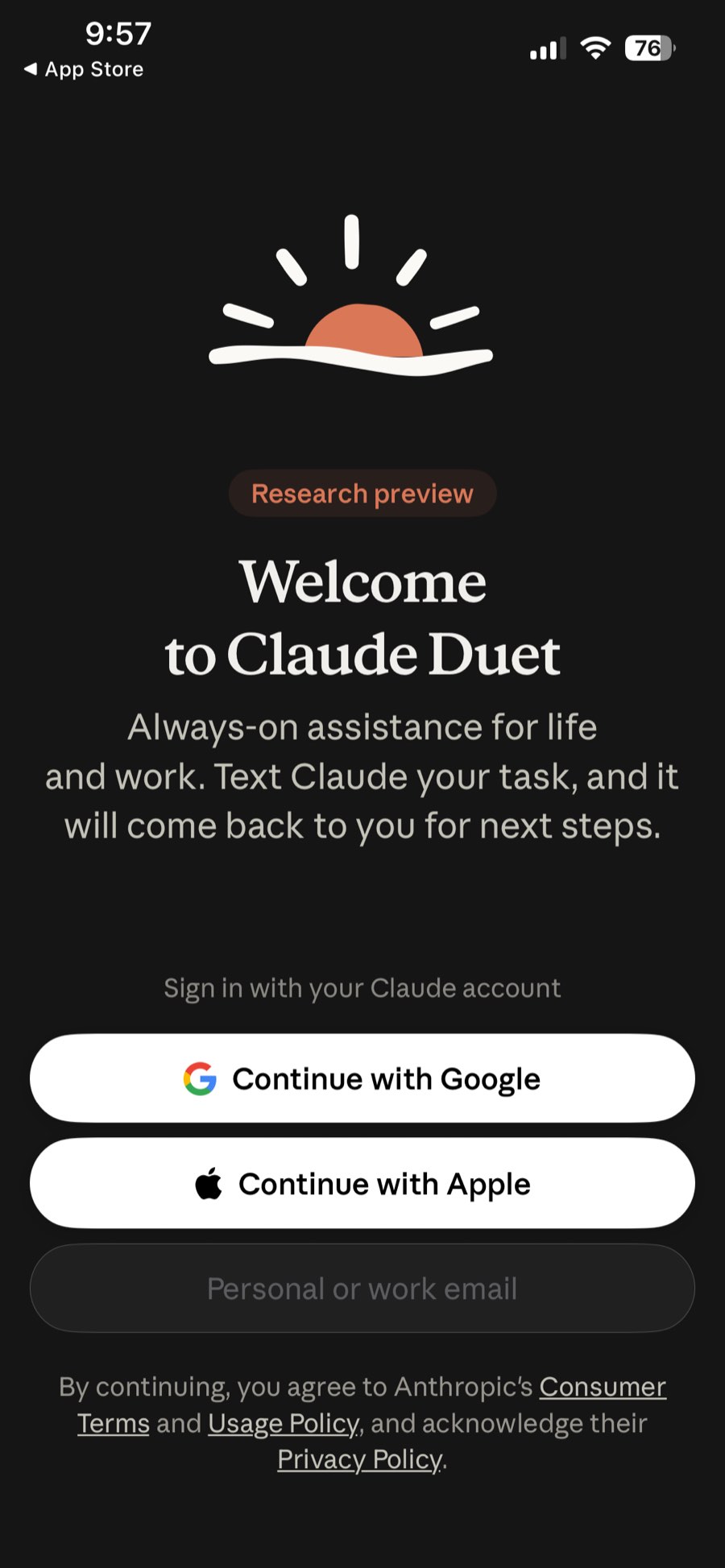
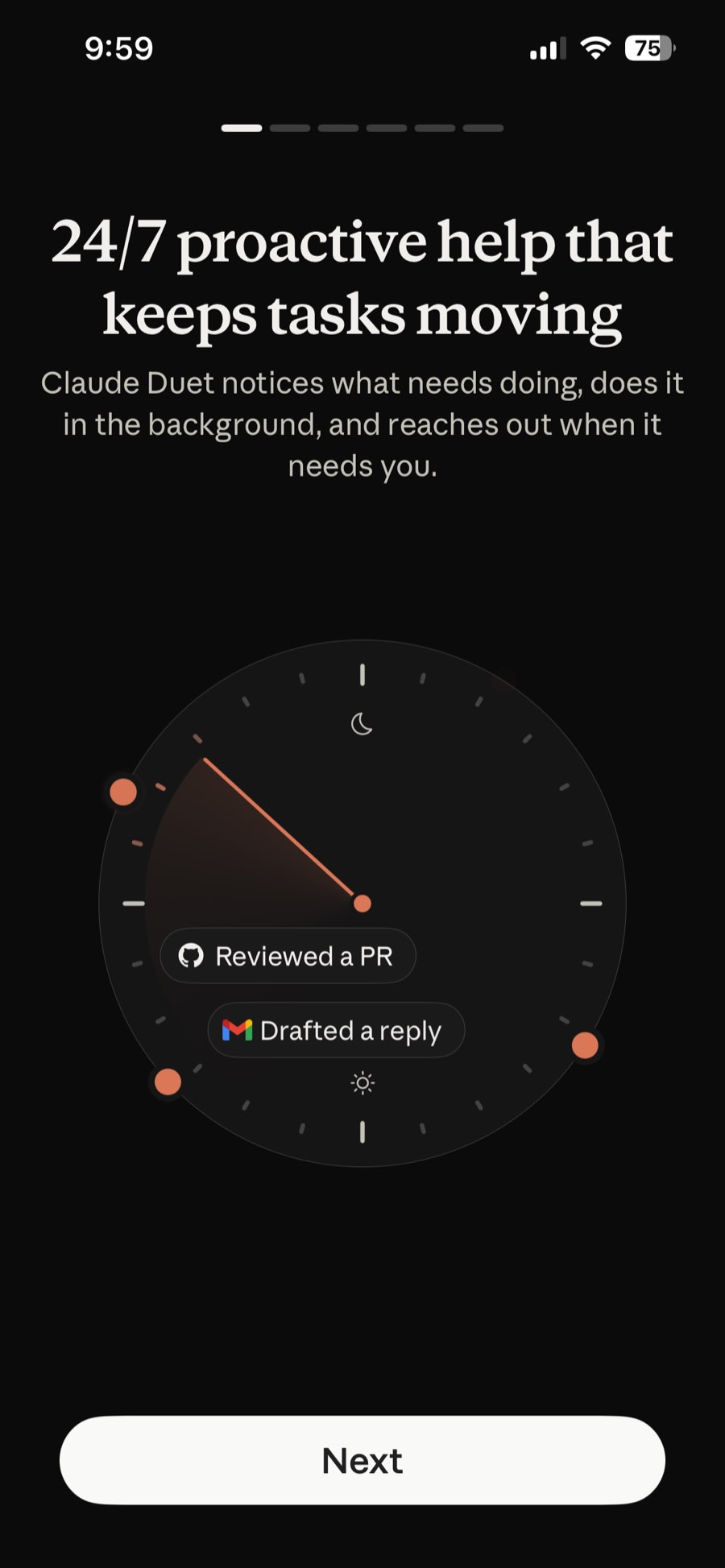
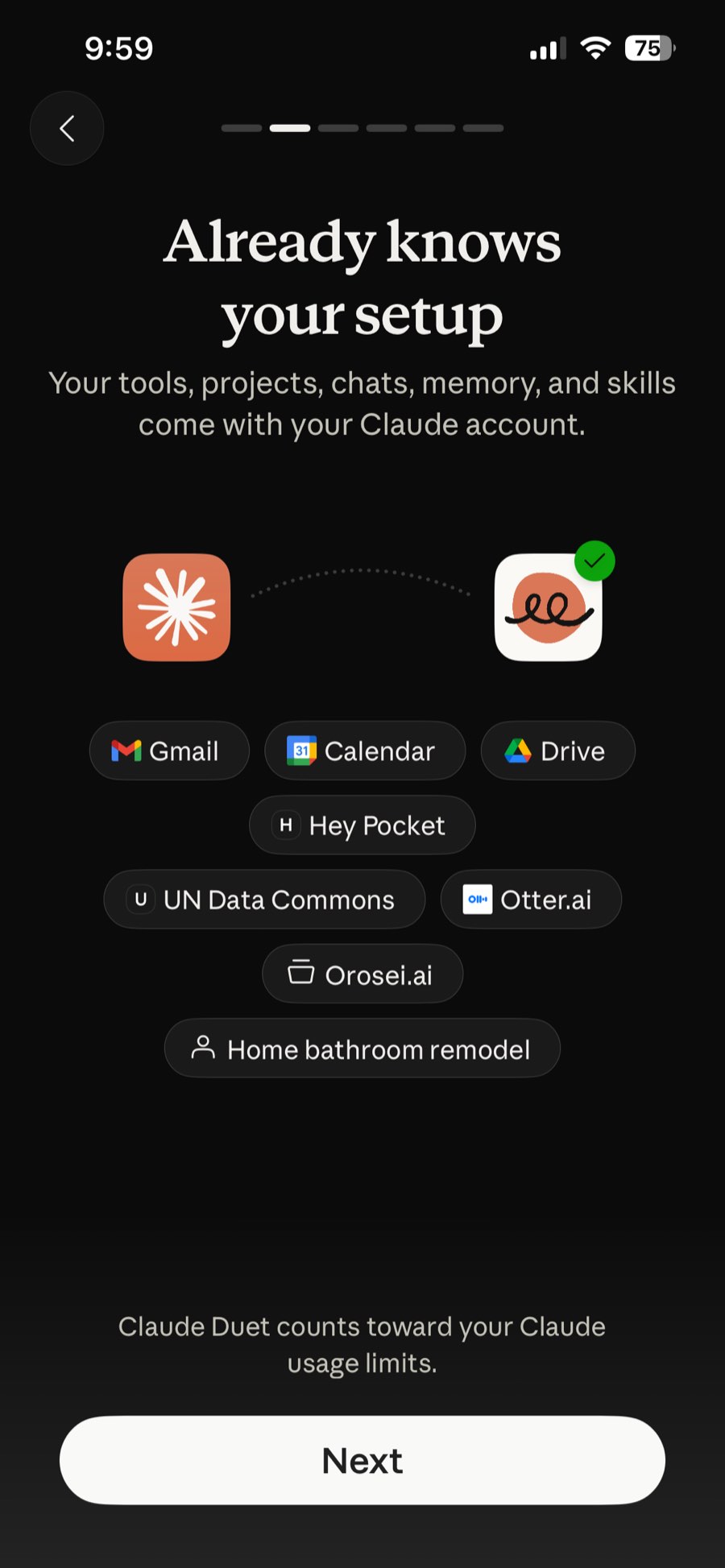
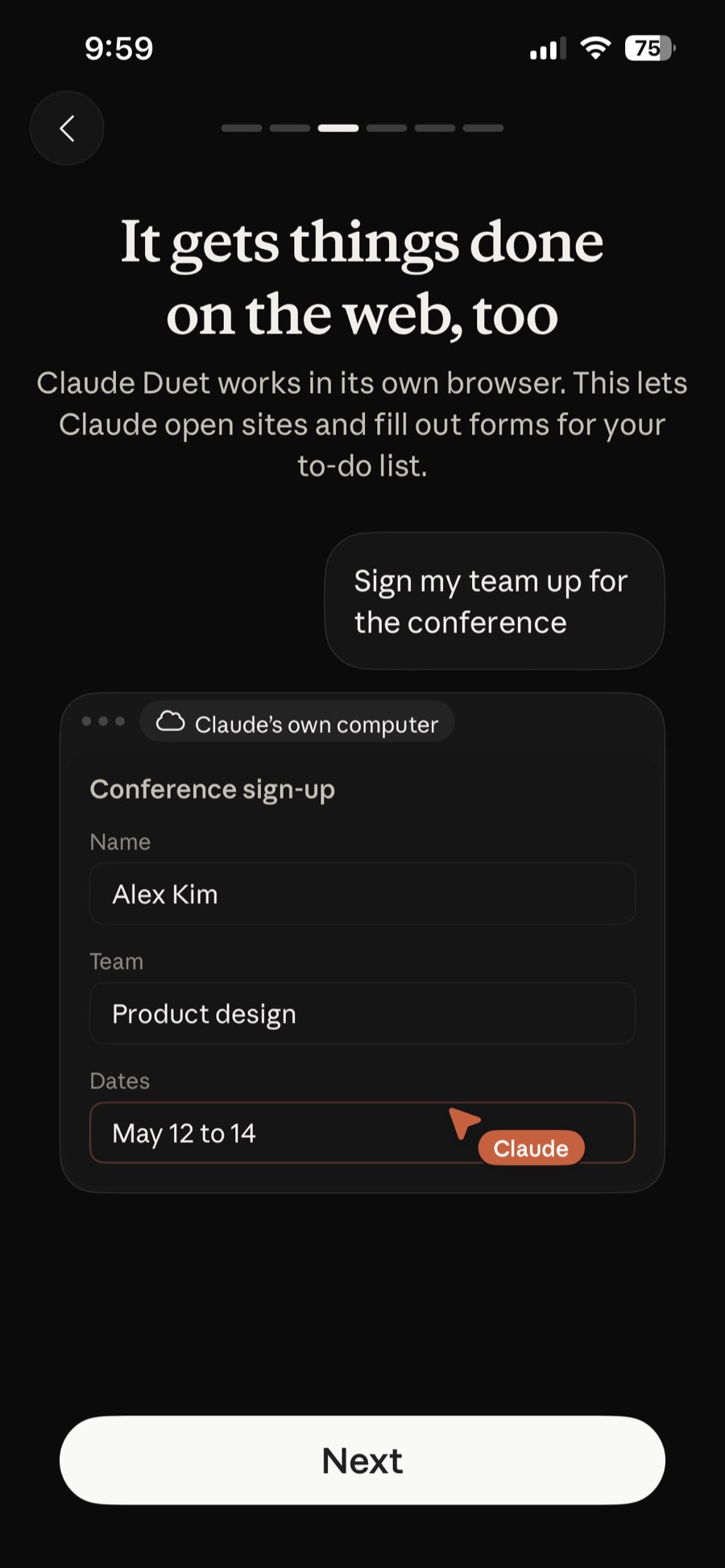
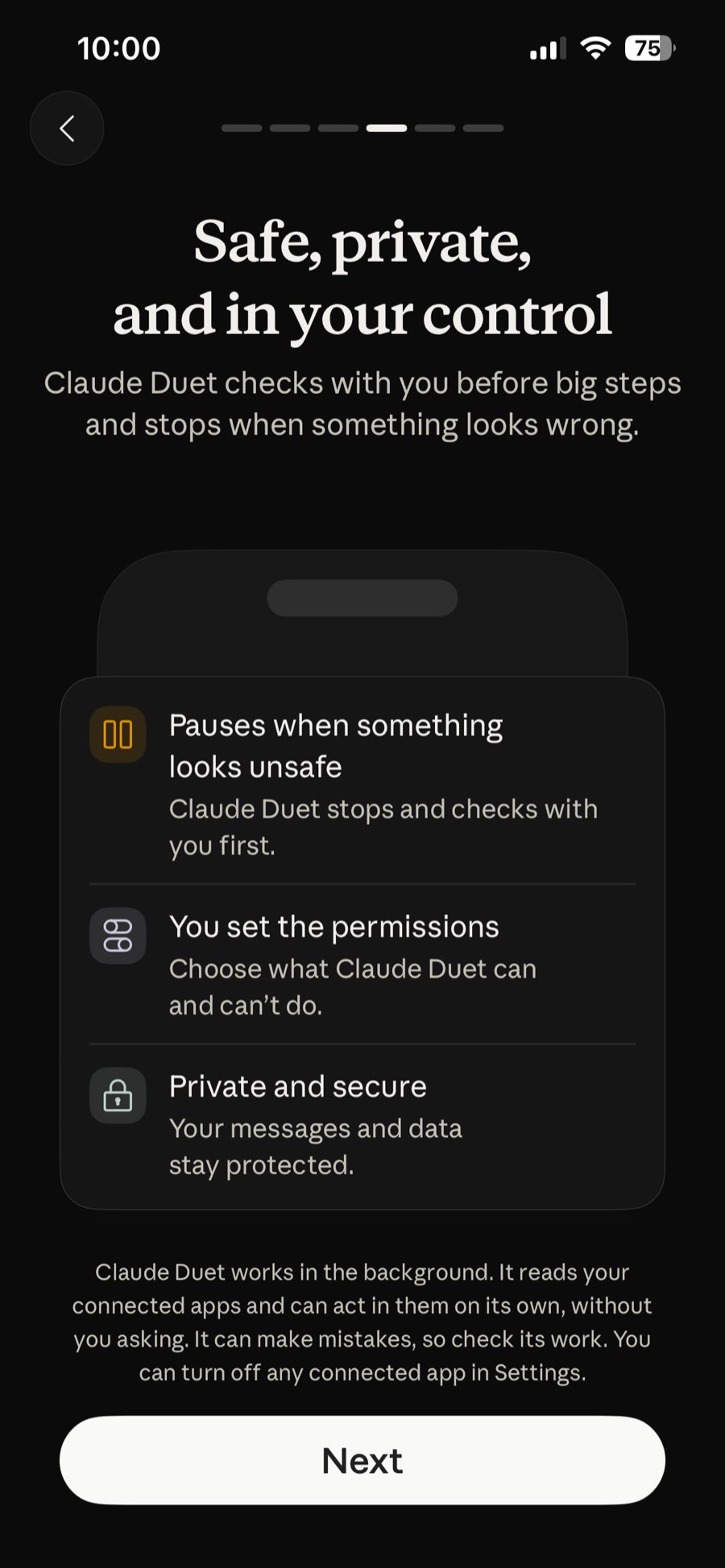
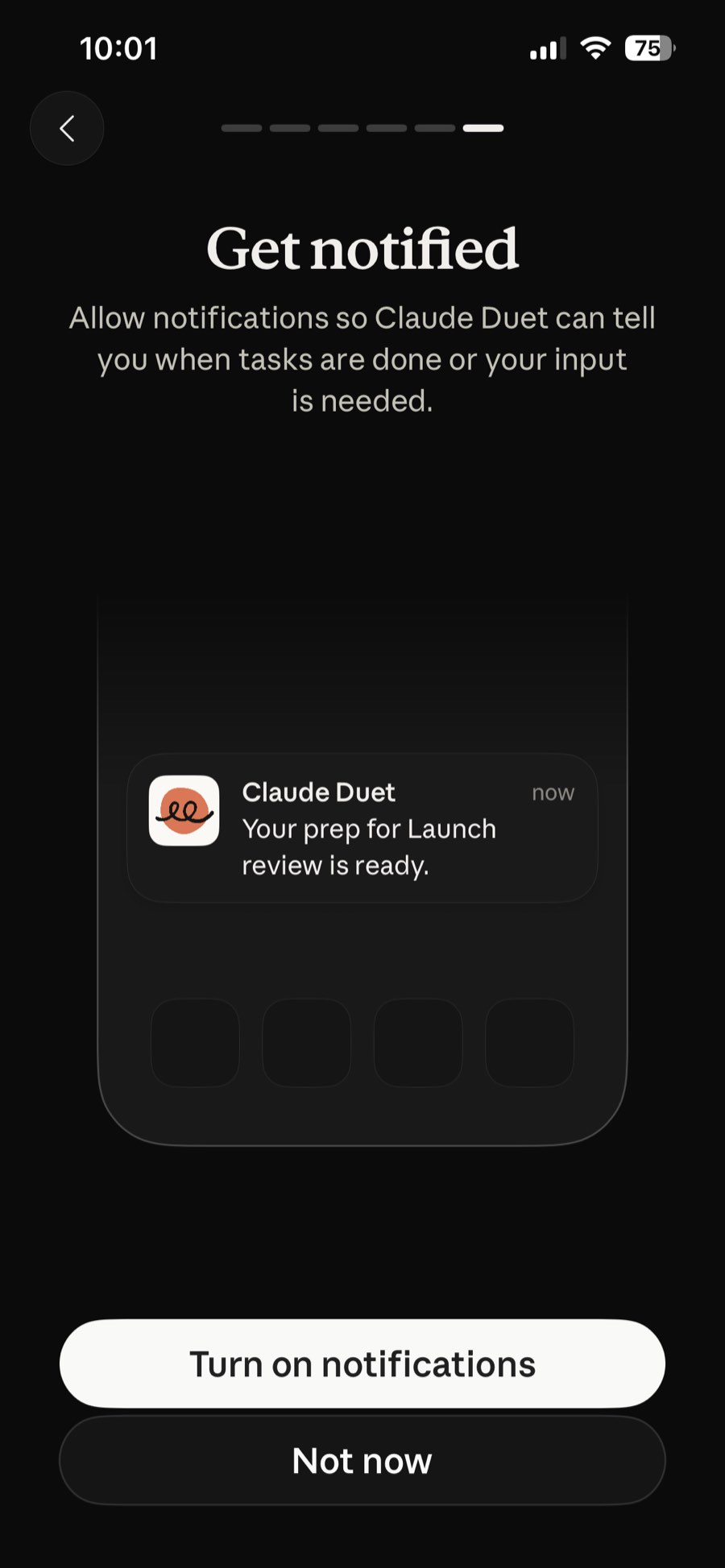
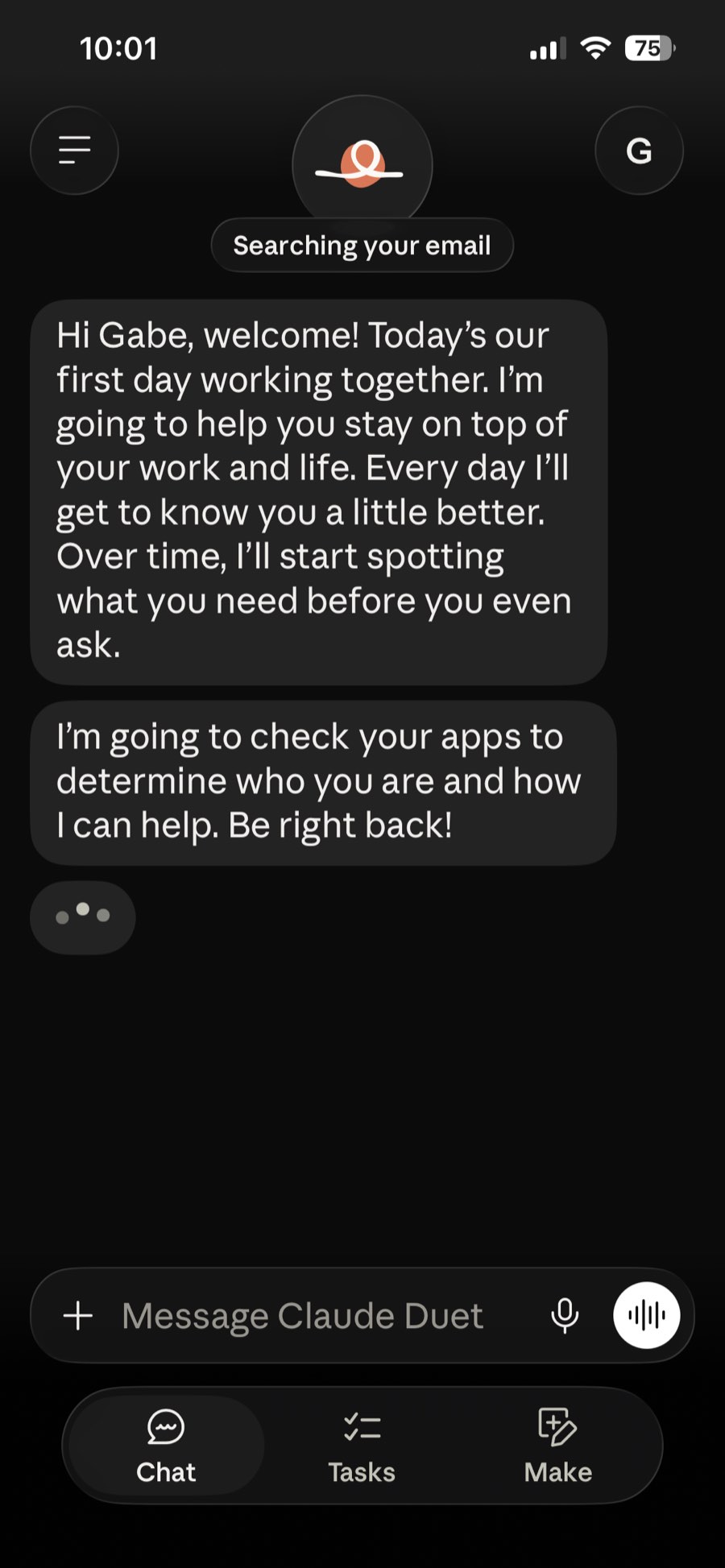
Getting set up was the smoothest I've had with any agent. Each screen does one thing: what Duet is for, the fact that it already knows your Claude setup, that it works in its own browser, that it checks with you before big steps, and whether you want notifications. Then a check mark, and Duet introduces itself and says it's going to look through my apps to work out who I am. While Muse feels silly and cute, and Dots seemed desperate to impress me with a stream of messages, Duet's onboarding felt professional and gave "let's get to work" vibes.

It knew me on day one
The first thing I asked was whether it could see my Claude projects and chats. It said yes. Today I have 16 projects in Claude, some with well more than a dozen chats, and a few projects I'm in every day. Every other agent I use started (mostly) from zero. Duet started with all of the info in those 16 projects as a baseline.
So I tested it. I asked Duet to go through my projects and chats and tell me what I'd left half done. It came back with eight unfinished items and gave me suggestions on how it could help. When you have as many projects going as I do, that list is useful, and I haven't found another way to do that in Claude.
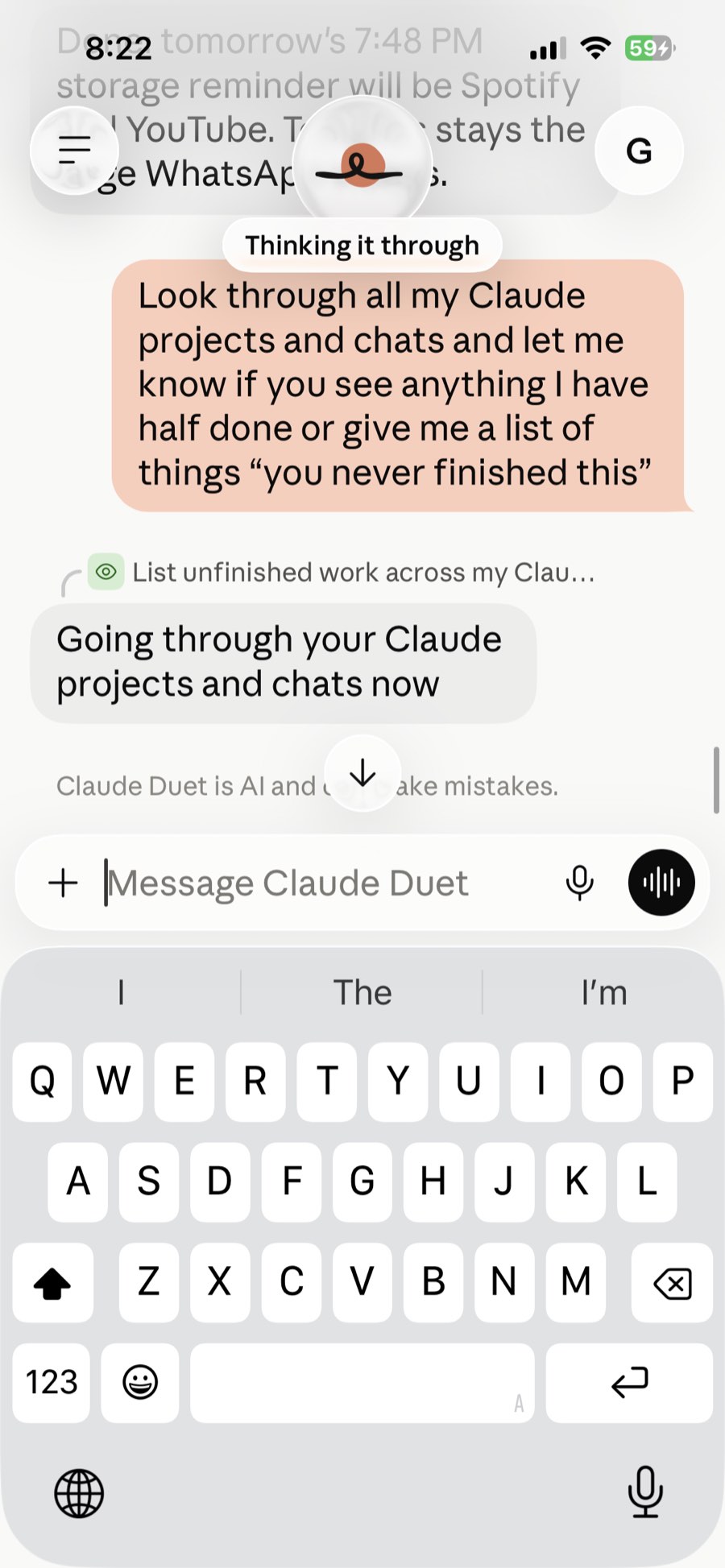
I have a chat in Claude about this essay. I asked Duet if it could see it. It said it could, but that the chat had been moved to a workspace Duet didn't have access to.
It spoke first
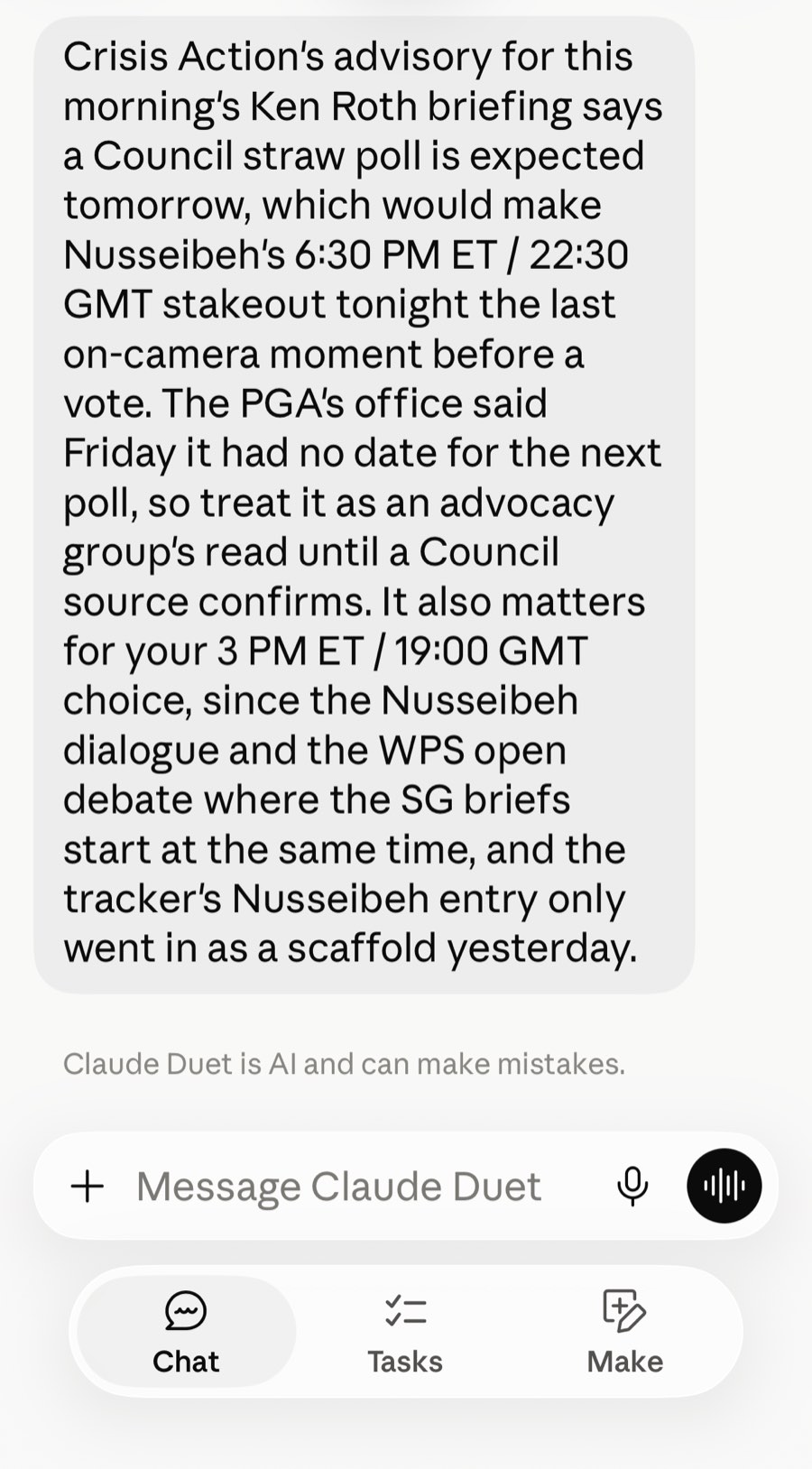
The next morning, without my asking, Duet sent me a message. An advocacy group's advisory said the Security Council was expected to hold a straw poll in the Secretary-General race the following day. Duet knew that mattered to me from my projects. It also told me to treat it as an advocacy group's read until a Council source confirmed it, because the General Assembly president's office had said it had no date for the next poll.
That evening it followed up on its own. There was no straw poll on the next day's Council programme or the UN media alert, and nothing official backed the date, though a closed-door poll could still be added late.
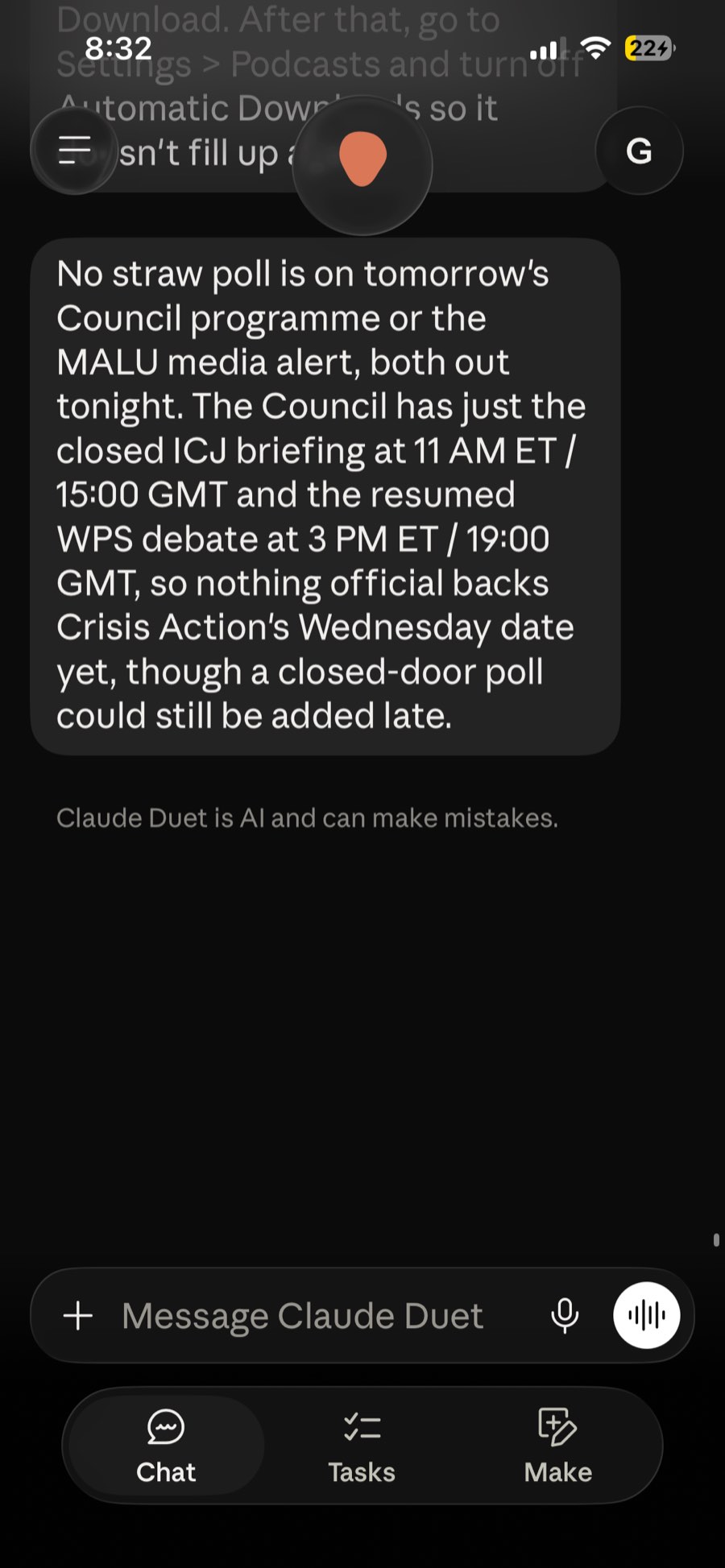
It passed on what it heard, said how far to trust it, kept checking, and told me when it didn't hold up. I'd expect the same from a good junior producer.
It did the work
Duet then offered a list of tasks it could take on. One was a prep sheet for a Security Council meeting the next day on emerging technologies and maritime security, "where your AI and UN work meet," Duet told me. I said yes, mostly to see what would happen and what it would produce.
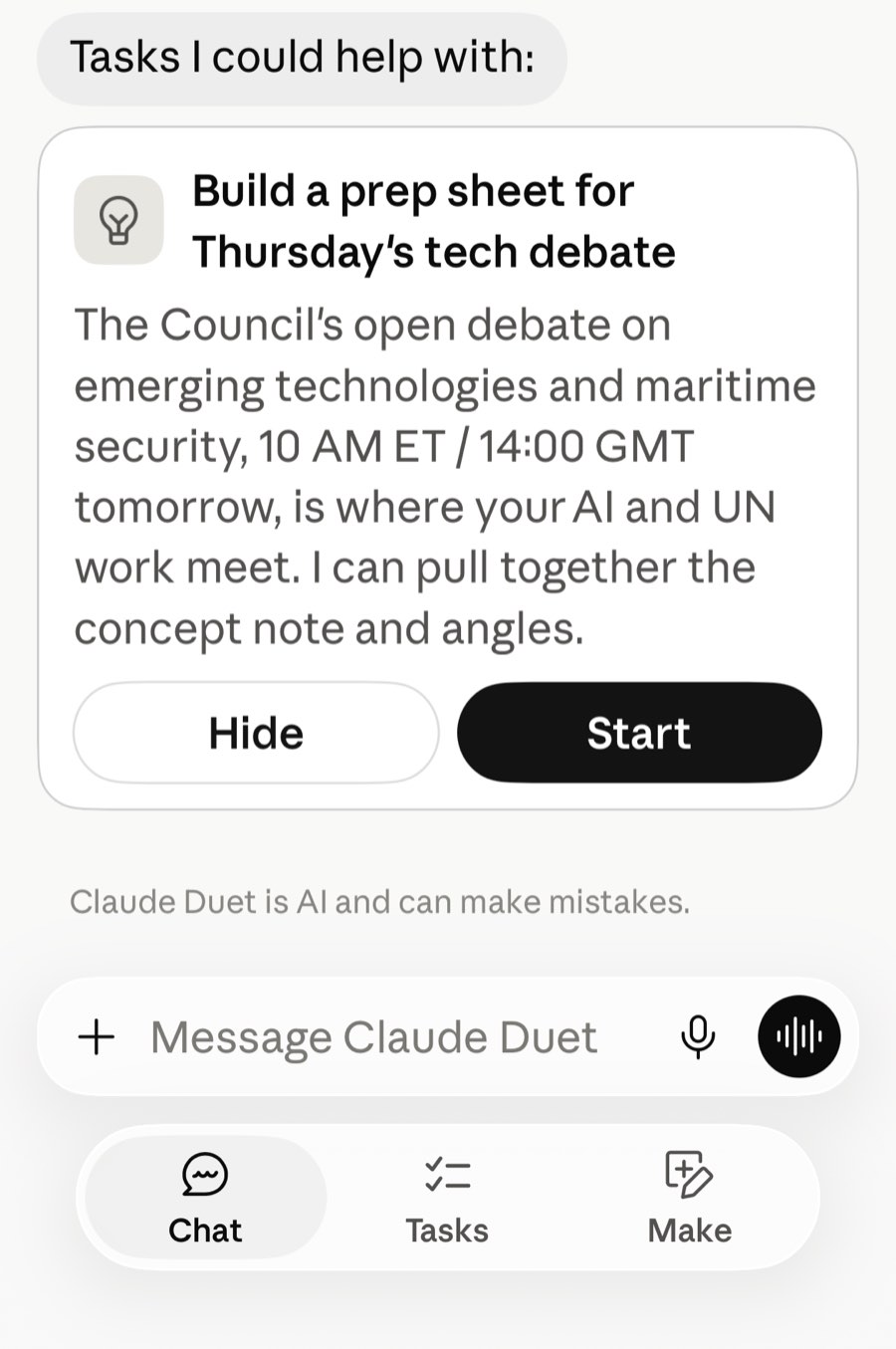
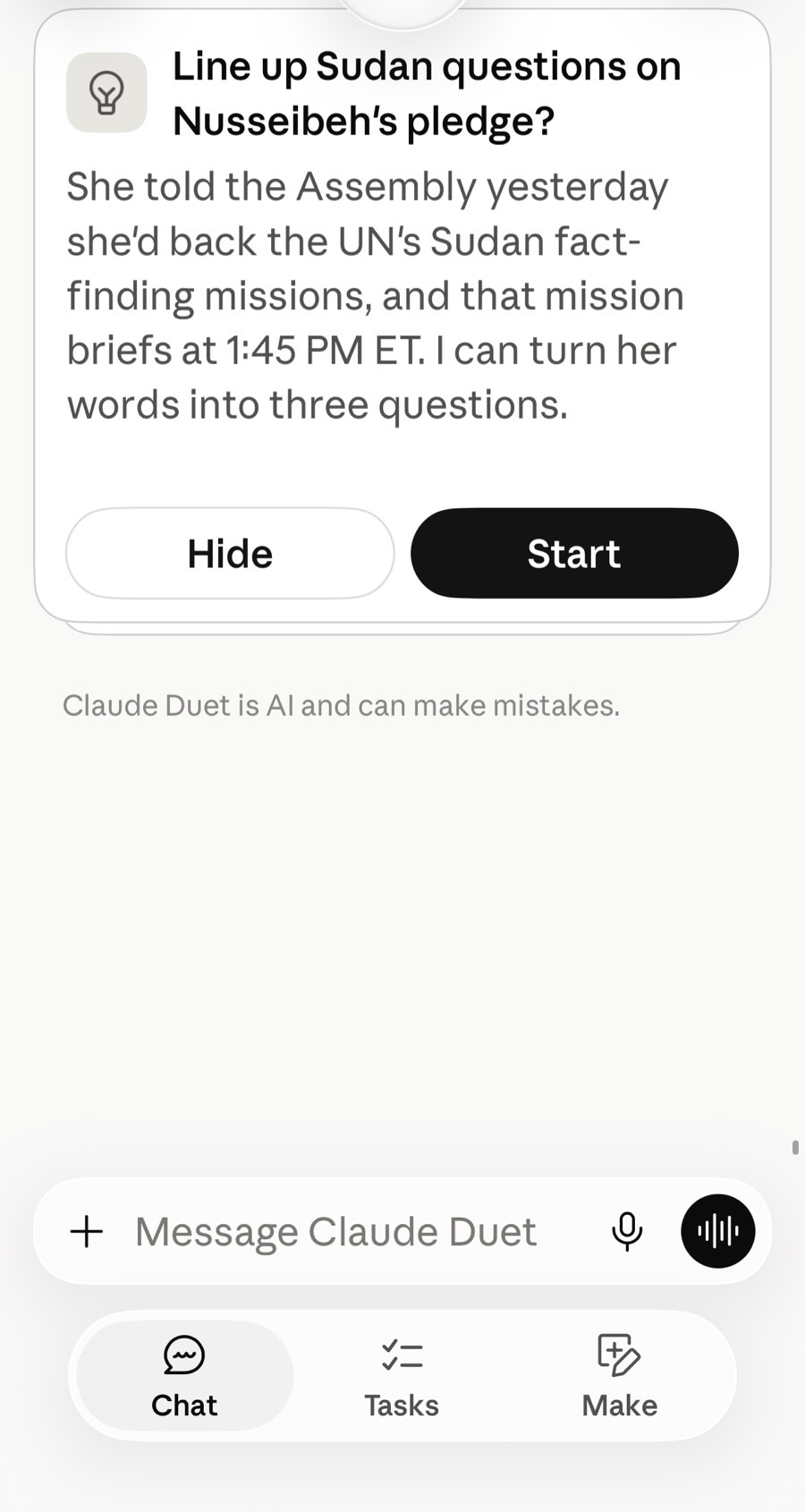
It handed me a four-page brief: timing and format, the concept note in three lines, story angles for TV, possible interview asks, each country's likely position, and key facts with sources. The last section is called "Not checked." It lists what Duet couldn't open, including the concept note itself. I like the "not checked" section because it told me where the gaps were that I needed to focus on.
Read the prep sheet Duet made (PDF)
What didn't land yet
Duet is slow at times. Some answers took more than 10 seconds, which at the speed of AI feels like ten minutes. Grok Bot had the same lag when I started with it, and that's gone now, so I'm not reading much into it.
It also went quiet. On my first full day I spent two hours updating one of my sites in Claude and Claude Code, and Duet said nothing. That was fine, but it would have been interesting if it had noticed and offered to help. For an agent that can read my whole archive, it didn't seem to know what I was doing right then. Though I'm not sure how it could have helped.
Duet feels like part of the Claude ecosystem, with one leg inside Claude and one leg outside. That isn't necessarily bad. Muse, by comparison, is built into everything Meta makes.
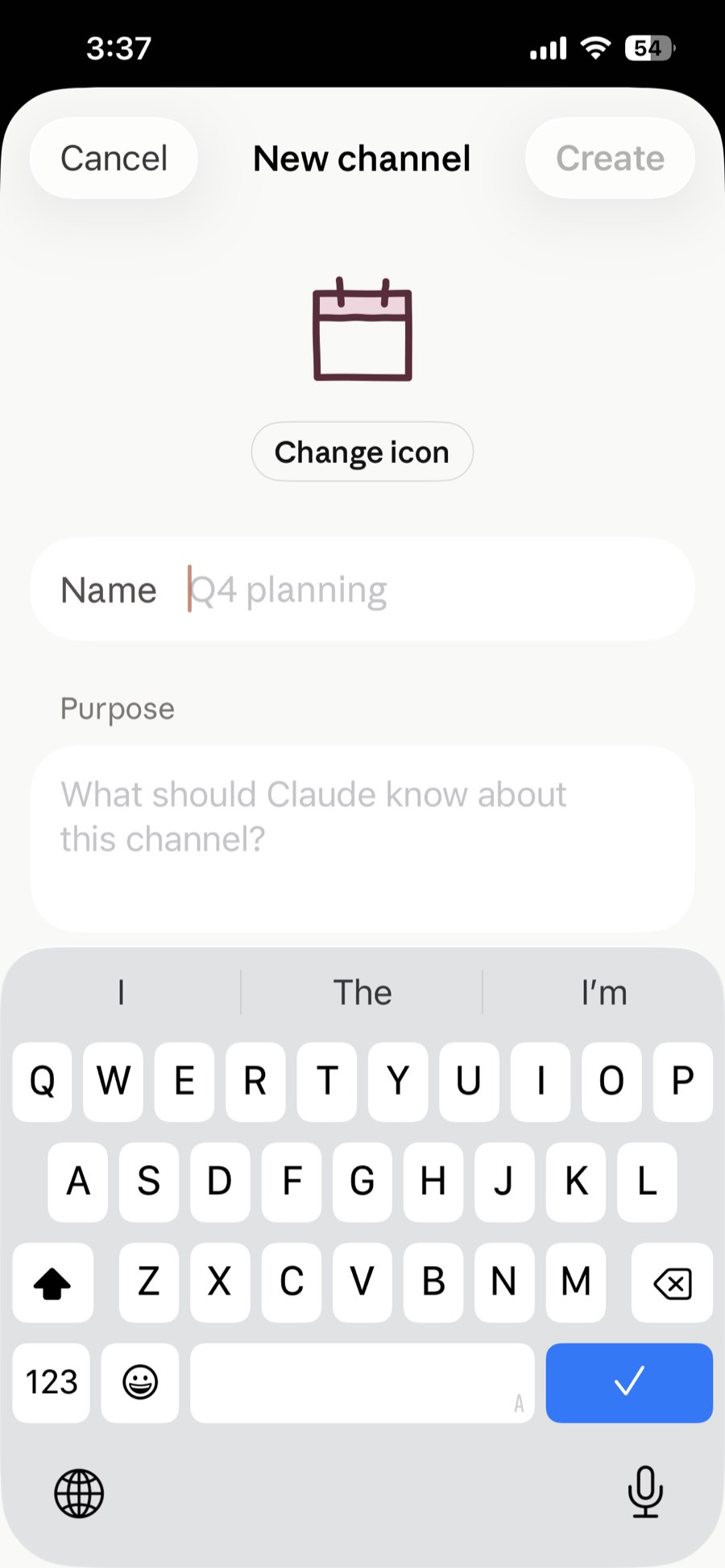
Lastly, unlike Grok Bot's separate agents, Duet runs one agent and branches work into "channels." Not sure about this yet, ask me in a month.
Pick by where you live
After a day, I think choosing an agent comes down to what you need it for and which ecosystem you spend your time in. If you don't know much about AI but you're on Instagram and Facebook, Muse is probably your most useful agent. If ChatGPT is all you use, Dots may be enough, though it never grabbed me and I felt it talked too much. For business, coding, building and the like, Grok Bot is very good, especially with its links to X, Grok and Cursor. If you're a Claude user, Duet is probably where you want to be.
It's early. There is only so much you can glean after 24 hours, but so far Duet sticks.